Marketing
Browse our curated collection of professional Marketing GIFs, perfectly suited for modern workplace communication.
Marketing GIFs



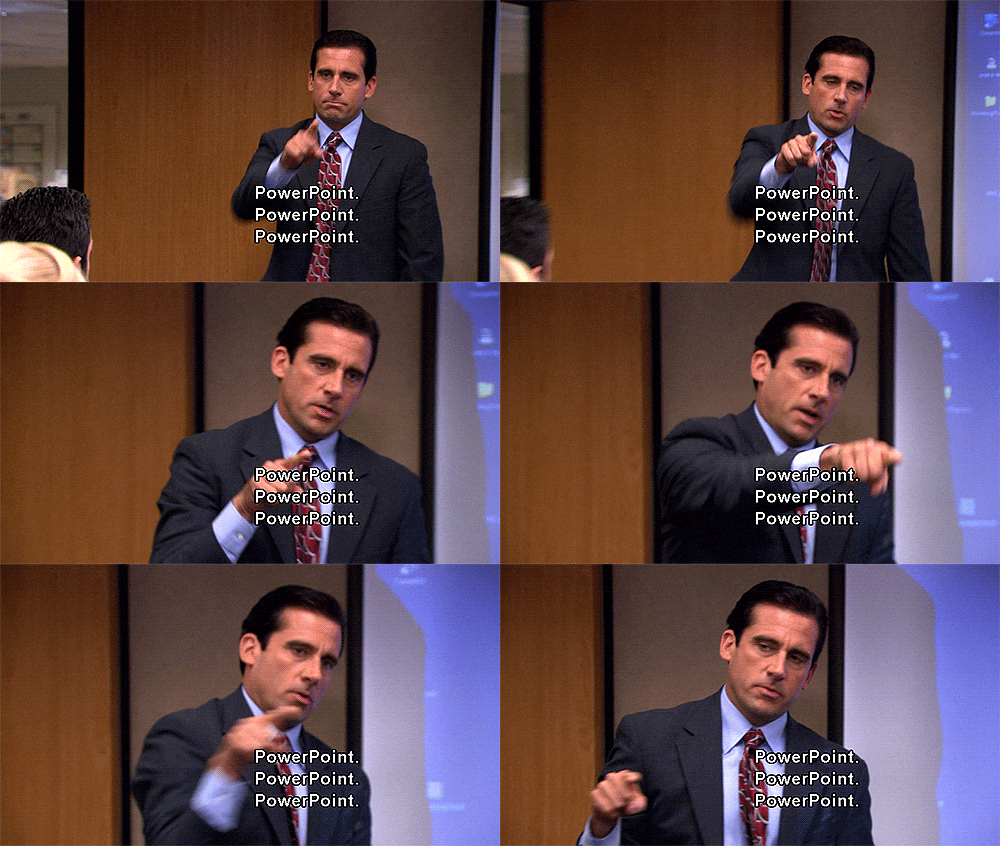



In the evolving landscape of digital communication, brevity, visual appeal, and emotional resonance have become paramount. While often associated with casual online banter, the Graphics Interchange Format (GIF) has matured into a sophisticated tool for modern marketing communication. As Senior Editors at Harvard Business Review, we recognize that mastering this format isn't about chasing trends, but about strategically leveraging a powerful medium to enhance brand narrative and drive engagement. This guide illuminates how to wield GIFs with purpose and precision, transforming them from mere animations into potent strategic assets.
The Psychology of GIFs in Marketing
GIFs tap into fundamental aspects of human psychology, making them exceptionally effective in capturing attention and conveying complex messages with unparalleled efficiency. They are not merely moving images; they are micro-stories, emotional triggers, and visual metaphors packed into a short, looping format.
- Emotional Engagement: GIFs excel at conveying emotions – humor, excitement, frustration, empathy – instantly. This emotional shortcut bypasses cognitive processing, fostering an immediate, visceral connection with the audience that pure text or static images often struggle to achieve. Brands that evoke genuine emotion build stronger, more memorable relationships.
- Attention Capture: In a scroll-heavy digital world, movement inherently draws the eye. A well-placed GIF can disrupt the visual monotony of a feed, commanding attention far more effectively than static content and increasing the likelihood of message absorption.
- Information Condensation: A single GIF can communicate a complex idea, demonstrate a product feature, or illustrate a process in seconds, far more efficiently than paragraphs of text. This visual shorthand respects the audience's time and caters to diminishing attention spans.
- Relatability and Authenticity: When used judiciously, GIFs can inject personality and a sense of human authenticity into marketing communications. They can break down formal barriers, making a brand feel more approachable, relatable, and aligned with contemporary digital culture.
Best Practices for Effective GIF Usage
To harness the full potential of GIFs, marketers must approach their integration with strategic intent, not as an afterthought. Thoughtful application ensures they amplify your message rather than dilute it.
- Know Your Audience and Brand Voice: Before deploying any GIF, assess if it aligns with your brand's established tone, values, and target demographic. A corporate B2B brand might opt for instructional or illustrative GIFs, while a consumer lifestyle brand could lean into humor and pop culture. Authenticity is paramount.
- Context is King: A GIF must always serve a purpose. Is it enhancing clarity, adding humor, illustrating a point, or signaling an emotion? Avoid using GIFs purely for decoration. They should add value to the message, not distract from it.
- Optimize for Performance: Ensure your GIFs are optimized for quick loading times without sacrificing visual quality. Large file sizes can deter engagement, particularly on mobile devices or slower connections. Tools like Giphy or specialized compressors can help maintain quality while reducing size.
- Prioritize Relevance and Clarity: The GIF should immediately convey its meaning and directly relate to the surrounding content. Ambiguity can lead to misinterpretation and undermine your message.
- Accessibility Matters: Always include descriptive alt text for GIFs, just as you would for any image. This ensures your content is accessible to users with visual impairments and improves SEO. Consider users who might have animations disabled or prefer static content.
- Strategic Placement: Whether in emails, social media, or landing pages, the placement of a GIF can dramatically impact its effectiveness. Use it to break up text, highlight a call to action, or introduce a new concept.
Common Mistakes to Avoid
Even with good intentions, the misuse of GIFs can inadvertently damage a brand's credibility and dilute its message. Professionals must be vigilant against these pitfalls.
- Irrelevance and Overuse: The most significant misstep is using a GIF simply because it's popular, without a clear strategic connection to your message or brand. Similarly, bombarding your audience with too many GIFs can lead to visual fatigue and make your communication appear unprofessional or juvenile.
- Misinterpretation: Humor is subjective, and cultural nuances vary. A GIF intended to be witty might be perceived as offensive, confusing, or inappropriate by a segment of your audience. Test your choices, especially for global campaigns.
- Poor Quality and Lack of Optimization: Blurry, pixelated, or excessively large GIFs reflect poorly on your brand. They suggest a lack of attention to detail and can frustrate users with slow loading times, leading to high bounce rates.
- Brand Inconsistency: Using GIFs that clash with your established brand voice can create dissonance. If your brand is serious and authoritative, overly whimsical or meme-based GIFs can undermine its perceived professionalism.
- Ignoring Accessibility: Failing to provide alt text for GIFs excludes a segment of your audience and is a missed opportunity for inclusive communication. It also negatively impacts SEO.
- Copyright Infringement: While many GIFs are widely shared, be mindful of intellectual property. For branded campaigns, consider creating custom GIFs or using licensed content to avoid potential legal issues.
By approaching GIFs with strategic foresight and adhering to these best practices, marketing professionals can transform a seemingly informal format into a powerful, engaging, and highly effective component of their digital communication strategy.